







Facial Nerve Palsy in a Female Teenager
September 13, 2012
A 14-year-old female presented with a 1-week history of right-sided facial numbness. Ear pain on the affected side was the first symptom and was followed by progressive paresthesia. She was otherwise asymptomatic.
Minocycline Hyperpigmentation
February 3, 2012
A 17-year-old girl being treated for mild acne, anxiety, and depression, presented with an ankle “bruise” related to an injury sustained 2 years earlier. Symptoms resolved with treatment, but the hyperpigmentation persisted.
|
In part 2 of this 2-part article, Drs Peter J. Taub and Paul Pierce discuss strategies to prevent skull deformation and treatment of infants with nonsynostotic plagiocephaly… Read More A female infant born at 29 weeks' gestation after premature membrane rupture was admitted to the neonatal ICU in respiratory distress. Delivery was complicated by maternal fever and meconium-stained amniotic fluid… Read More That’s the question we put to Dr John Harrington of Eastern Virginia Medical School and Children’s Hospital of The King’s Daughters and Dr Michael Paul and Rena Vanzo of Lineagen—provider of a new genetic testing… Read More When rationalizing random acts of violence, it is important to consider the path leading up to the tragic event and be wary of current opinions propagated in the media. Is it mental illness or moral depravity—both?… Read More
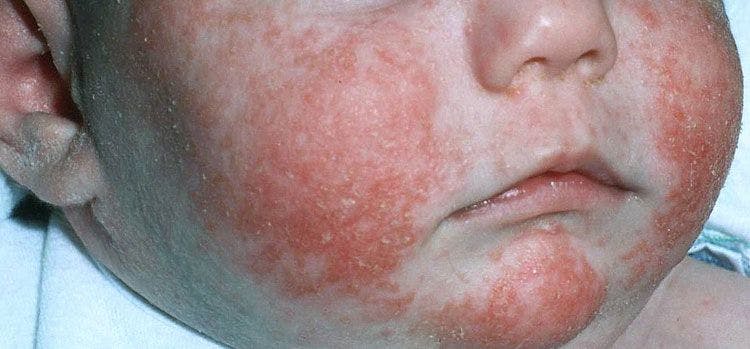
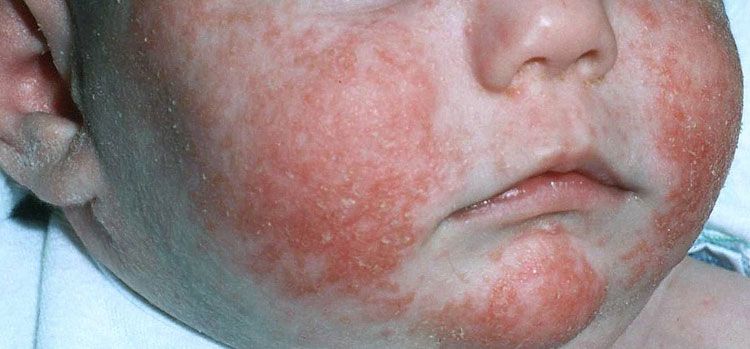
June 6, 2012 This distribution of an inflammatory disorder in a very young child almost always indicates atopic dermatitis. The family history of asthma suggests the atopic diathesis. More »May 1, 2012 Abnormal pigmentation, nail dystrophy, and leukoplakia may signal dyskeratosis congenita. More »December 15, 2011 
An 18-year-old Hispanic girl with no significant medical history presented with asymptomatic white spots on her lower... More »April 1, 2011 A 6-year-old boy presented with a swollen penis and lip within an hour after ingesting some peanuts. More »January 13, 2011 A 4-year-old boy who is new to your practice presents for a well-child visit. His parents report that he has had brownish patches on his torso and back since early infancy. The lesions have decreased in size and number as he has aged. The rash is intermittently pruritic, especially when anyone... More »January 10, 2011  A 4-year-old boy was referred for evaluation of refractory eczema that first appeared at 1 month of age. More »December 20, 2010 
This 16-year-old boy had slowly progressive hypopigmented lesions on
the lower extremities for the past 4 years. He also... More »October 8, 2010  For 3 days, a 10-year-old boy had an itchy, tense, vesicular rash on the fingers of both hands (A). He was otherwise healthy.
More »September 13, 2010  A7-month-old boy with a history of severe atopic dermatitis and asthma was brought for evaluation of a generalized rash, fever, and irritability... More »August 9, 2010  The rash on this 4-week-old girl had appeared 5 days earlier on her face as thickened scales on an erythematous base and subsequently spread to... More »
Showing 1 - 10 of 48 results.
BLOG: CHILDREN'S HEALTH MATTERS
Making a Better Place to Live For Children With Autism
April 12, 2011
West Virginia (the state in which I practice) was not one of the 10 best places to live if you have autism, according to this year’s survey from Autism Speaks. Although thanks to a piece of legislation enacted this month, it is now a better place to live if you have autism. Your state can become better too.
Antibullying Efforts: What You Can Do
March 16, 2011
In a conference last week, President Obama announced a new Web site http://stopbullying.gov to help raise awareness about the issue. This is part of an effort to encourage cooperation between government agencies and educators to protect children from bullying based on race, ethnicity, disability, or sexuality. Are you an advocate for prevention? Share your antibullying efforts with colleagues.
|
Five Steps to Improving Patient Access Judy Capko, May 21, 2013 Patient access is getting increased attention through reform initiatives. Here are five steps you can take to make sure patients get appropriate access to care in your office.
SEARCH MEDICA SEARCH RESULTS
Find peer-reviewed literature and websites for practicing medical professionals
|
|